
Modern spine surgery, designed around precision and recovery.
Alliance Neurosurgery PC uses advanced minimally invasive techniques, robotic-guided technology, and personalized treatment planning to care for spine conditions with precision and a focus on recovery.
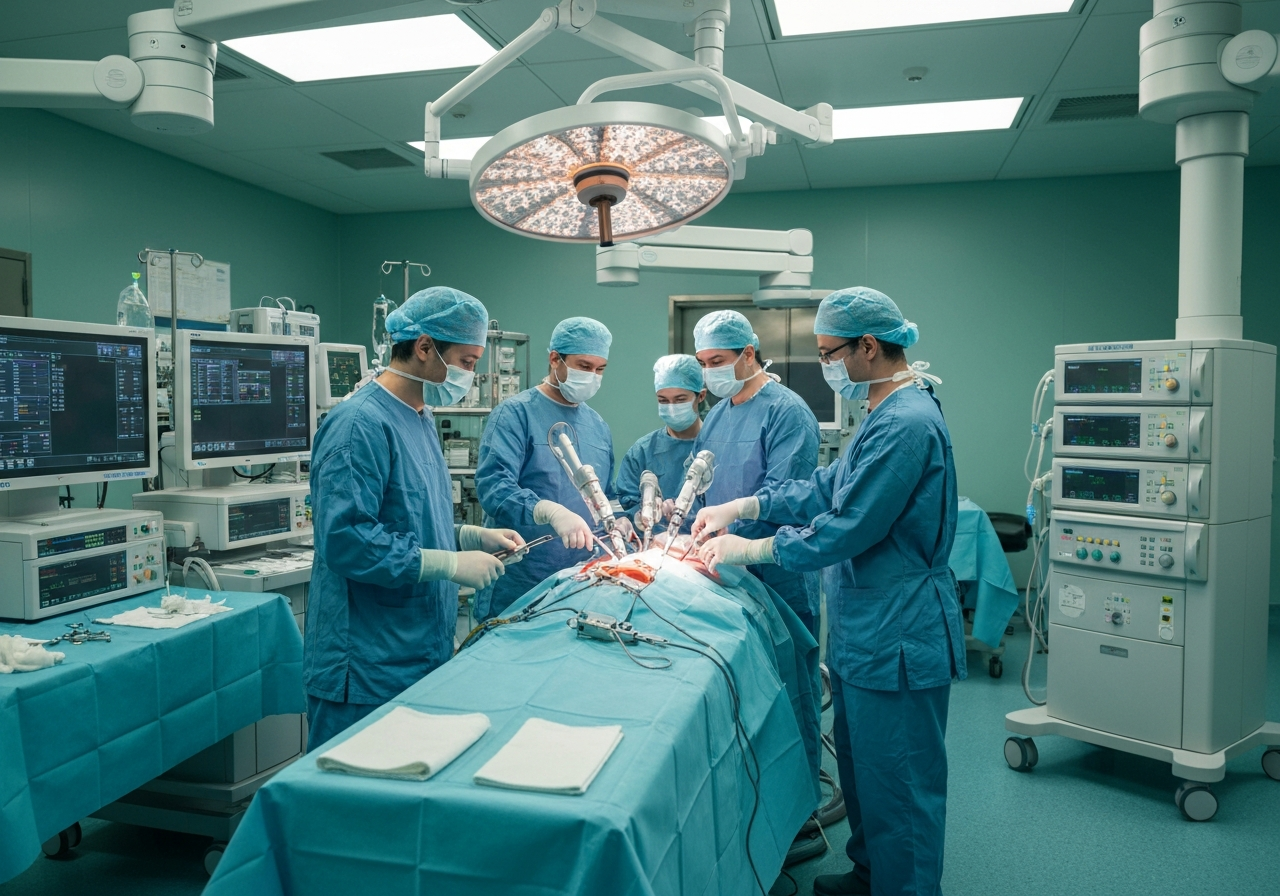
Advanced Spine
Technology
Surgery designed around recovery
Traditional open spine surgery may require larger incisions and more muscle disruption. Minimally invasive techniques use smaller access points, advanced imaging, and specialized instruments to accomplish surgical goals with less disruption to surrounding tissue when appropriate.
Smaller Incisions
Smaller access points may reduce disruption to surrounding tissue.
Advanced Visualization
Imaging and visualization help guide precise treatment.
Focused Treatment Planning
Every approach begins with careful evaluation and planning.
Reduced Muscle Disruption
Techniques are designed to limit muscle disruption when appropriate.
Potential for Shorter Recovery
Some patients may experience a more efficient recovery pathway.
Patient-Specific Approach
Treatment recommendations are based on each patient's anatomy, condition, and goals.
Treatment Options
Alliance Neurosurgery PC evaluates each patient individually and recommends treatment options based on diagnosis, anatomy, goals, and overall health.
Minimally Invasive Spine Surgery
A family of techniques that use small incisions, tubular retractors, and specialized visualization to access the spine while reducing disruption to healthy tissue.
Robotic-Guided Spine Surgery
Robotic guidance and navigation tools help surgeons plan procedures based on detailed imaging and anatomy. This technology supports precision during implant placement and complex spine procedures.
Endoscopic Discectomy
Endoscopic discectomy uses a small incision and high-definition camera to remove disc material that may be compressing a nerve. For appropriate patients, this may support a more efficient recovery.
Microdiscectomy
Microdiscectomy is a focused microsurgical treatment for certain lumbar disc herniations. The goal is to remove the portion of disc material pressing on a nerve while preserving surrounding structures.